
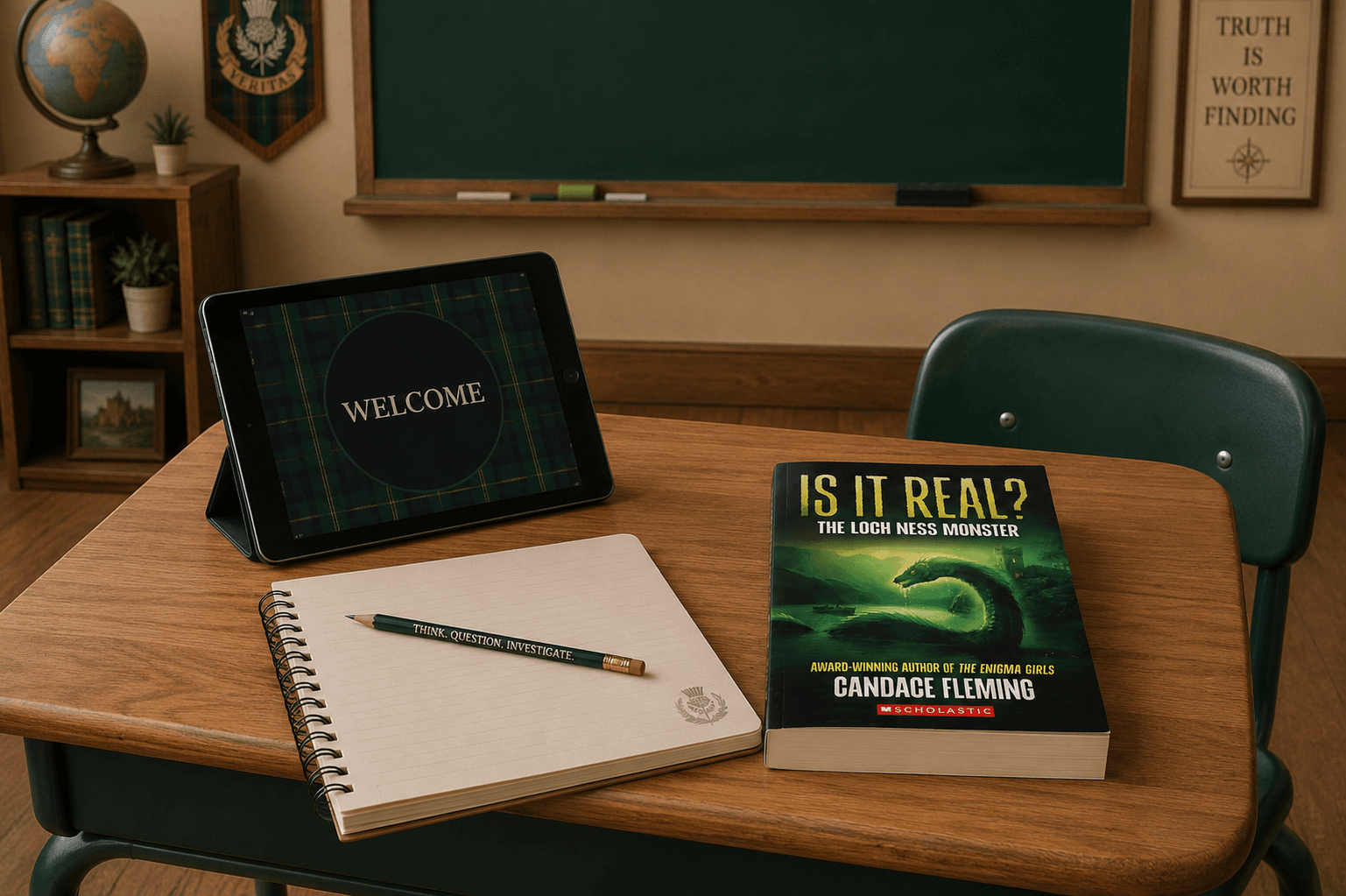
Student Interactive Notebook
Guided student learning activities
Hands-on, scaffolded activities guide students in analyzing claims, evaluating sources, recording findings, and building evidence-based conclusions about the Loch Ness Monster
-
To design an interactive reader that guides eighth-grade students through the investigation of the Loch Ness Monster, using engaging scenarios, clear explanations, and scaffolded activities to help them apply the BSSI Handbook's investigative methods. The notebook was designed to help students recognize how personal bias can influence their thinking, distinguish what evidence actually shows from what it might imply, and evaluate evidence objectively before drawing conclusions.
-
To prepare students to analyze the evidence presented in Is It Real? The Loch Ness Monster? by developing their skills in assessing witness credibility, determining the strength of evidence using the BSSI Evidence Scale, identifying bias, and recognizing corroboration. Students practice explaining their reasoning with evidence-based qualifiers and supporting their conclusions with specific details. Through individual work, small-group discussions, and whole-class sharing, students learn that investigators may reach different conclusions. However, they must justify their interpretations using consistent investigative standards and respectful discussion.
The design and development process:
Writing & Reasoning:
Every verdict asks for the same things: evidence, a qualifier, and a BSSI vocabulary word. This repetition teaches students to describe how strong the evidence is and to explain their reasoning objectively. Rather than simply stating whether they believed a claim, students had to identify relevant evidence, explain what it supported, and acknowledge the limits of what could be concluded.
Evidence Analysis:
Developed activities that guide students through determining whether evidence is credible, evaluating its strength with the BSSI Evidence Scale, and arranging evidence on a ladder to show how it supports competing explanations.
Students also examine witness bias, identify corroborating evidence, and consider alternative explanations. Activities involving Marmaduke Wetherell's footprints help students distinguish what the evidence actually establishes from what they might infer, including the difference between evidence suggesting that someone could have created the prints and evidence proving that they did.
Classroom Testing & Iterative Development:
Built and revised the interactive notebook while teaching the unit, consulting with fellow teachers and the district instructional coach. Classroom observations and feedback helped me identify areas where students needed additional guidance and refine the activities accordingly. Students shared and defended their interpretations in small groups and whole-class discussions, practicing how to disagree respectfully while supporting their reasoning with evidence.
Instructional Scaffolding:
Organized the interactive notebook into four parts that gradually build students' investigative skills. Part I introduces the BSSI Handbook through familiar scenarios, including a missing-trophy case I created and the UFO case from the book, before students tackle the more complex Loch Ness evidence. Part II asks students to examine their own beliefs about cryptids and identify potential biases that could influence their investigation. Part III focuses on recording evidence without judging it, while Part IV guides students through a systematic analysis of the evidence.
Bias Awareness:
Designed the cryptid-rating activity to help students recognize their starting beliefs before investigating the Loch Ness case. Students identify their bias profiles and consider how those beliefs might affect their evaluation of evidence. The goal was not to eliminate personal beliefs but to help students recognize them and apply consistent standards when evaluating evidence.
Visual Design:
Used Microsoft Word, ChatGPT, and Canva to develop clear instructions, structured activities, and visually engaging pages. Reused the same illustrated girl from the BSSI Handbook to maintain continuity across resources and provide students with a familiar guide throughout their investigation.
Student Interactive Notebook Sample

Let’s Create Together
Submit an inquiry to work with me. Currently accepting requests for project-based work.