
The Buzz About Native Bees
Nonfiction article , Science & Nature
Grades 4–6 | 512 words | ATOS 5.07
Honey bees, with their black and golden stripes, get all the attention. They live together in colonies and build honeycomb nests called hives. In 1622, English colonists brought honey bees to North America. But honey bees are only part of the story.
Native bees are often forgotten, but they are important pollinators. The U.S. Geological Survey estimates that about 4,000 native bee species live in the United States. Some of these bees are becoming less common, and they need your help.
Don’t Squash Me
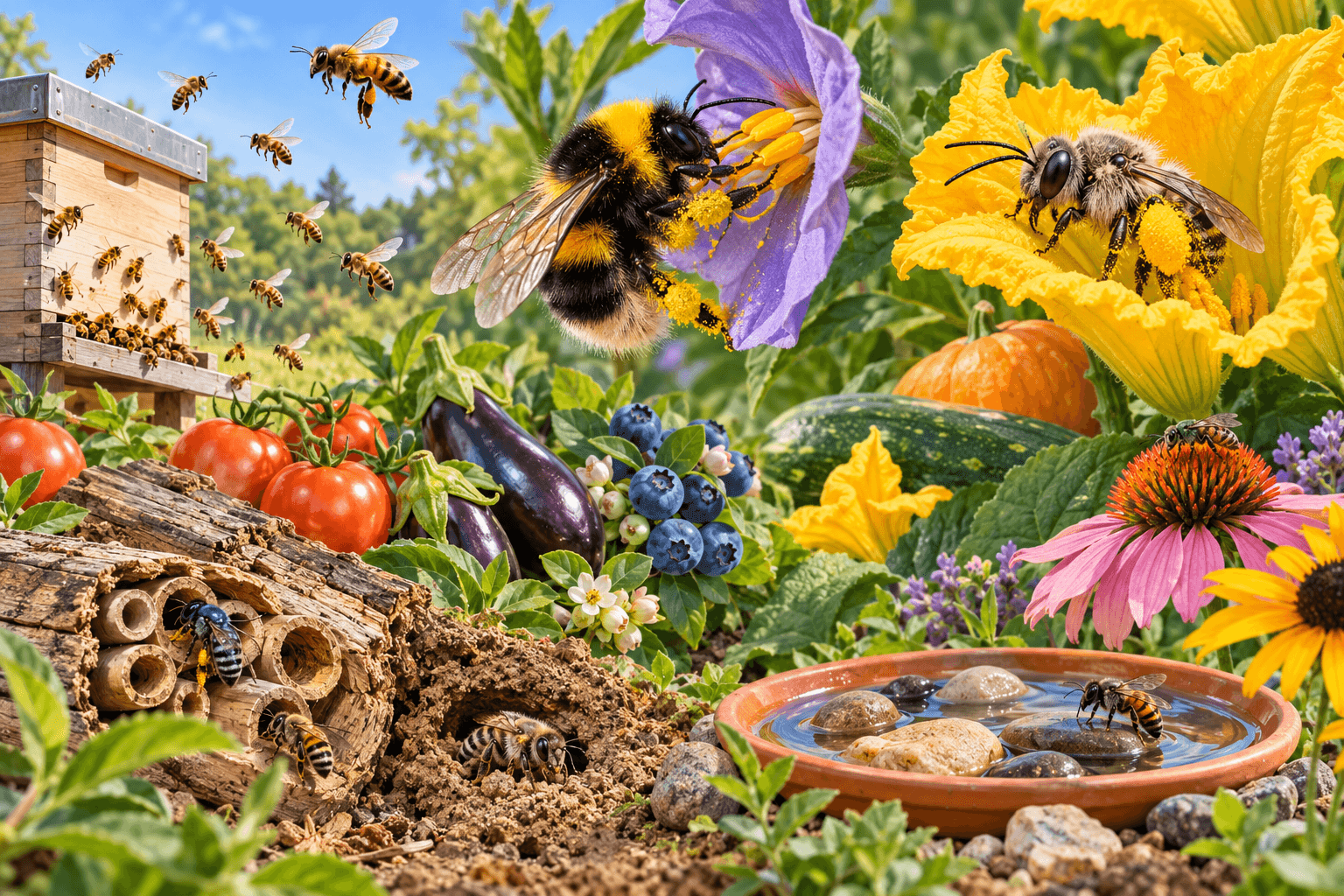
Our food supply relies on native bees. The Smithsonian Magazine reports that native bees pollinate about 75% of plants in the United States. This includes wild plants and crops. Some plants depend heavily on native bees for pollination. These include tomatoes, eggplants, kiwis, and blueberries.
The flowers of these plants hold their pollen inside structures that release it when the flowers are shaken. Certain native bees can vibrate their bodies to loosen the pollen. A bumble bee grabs a flower and vibrates its body, shaking loose the pollen. Honey bees cannot do this. This is called buzz pollination. These tiny bees help put some of your favorite foods on your table.
Squash bees are “specialist” bees. They can be found on farms and in gardens. They are picky eaters that only visit certain kinds of plants.
Squash bees collect pollen from squash, pumpkins, and other gourds. Their fuzzy bodies help keep them warm. This is important on chilly mornings when gourd flowers open. Squash bees also have large eyes. Their eyes help them see in dim light. Female squash bees have long hairs on their hind legs. Pollen sticks to these hairs. As the bees visit other flowers, they carry the pollen with them, helping pollinate the plants.
Home Alone
Unlike honey bees, most native bee species live alone. A female bee usually builds her own nest and gathers food for her young. Many native bees build nests underground. Others build their nest in trees, hollow flower stems, fallen logs, and small cracks in rocks. Some even make homes in empty snail shells.
You Can Help Bees
Native bees need food and safe places to build their nests. With an adult’s help, you can make your yard or garden more welcoming to bees.
Create a bee bath: Add small rocks and water to a shallow container, such as a plastic lid. Put it in a shady spot so bees have a safe place to drink.
Plant flowers: Choose flowers of different shapes, sizes, and colors to give bees the food they need.
Become a citizen scientist: The next time you see a bee, watch what it does. What flowers does it visit? Where does it go? You can report what you see to the Great Sunflower Project or Bumble Bee Watch.
You may not notice native bees, but they affect your daily life. They pollinate plants that provide us with food, clothing, and other things we use every day. So, the next time you see a bee, take a closer look. That bee has an important job.

Let’s Create Together
Submit an inquiry to work with me. Currently accepting requests for project-based work.