
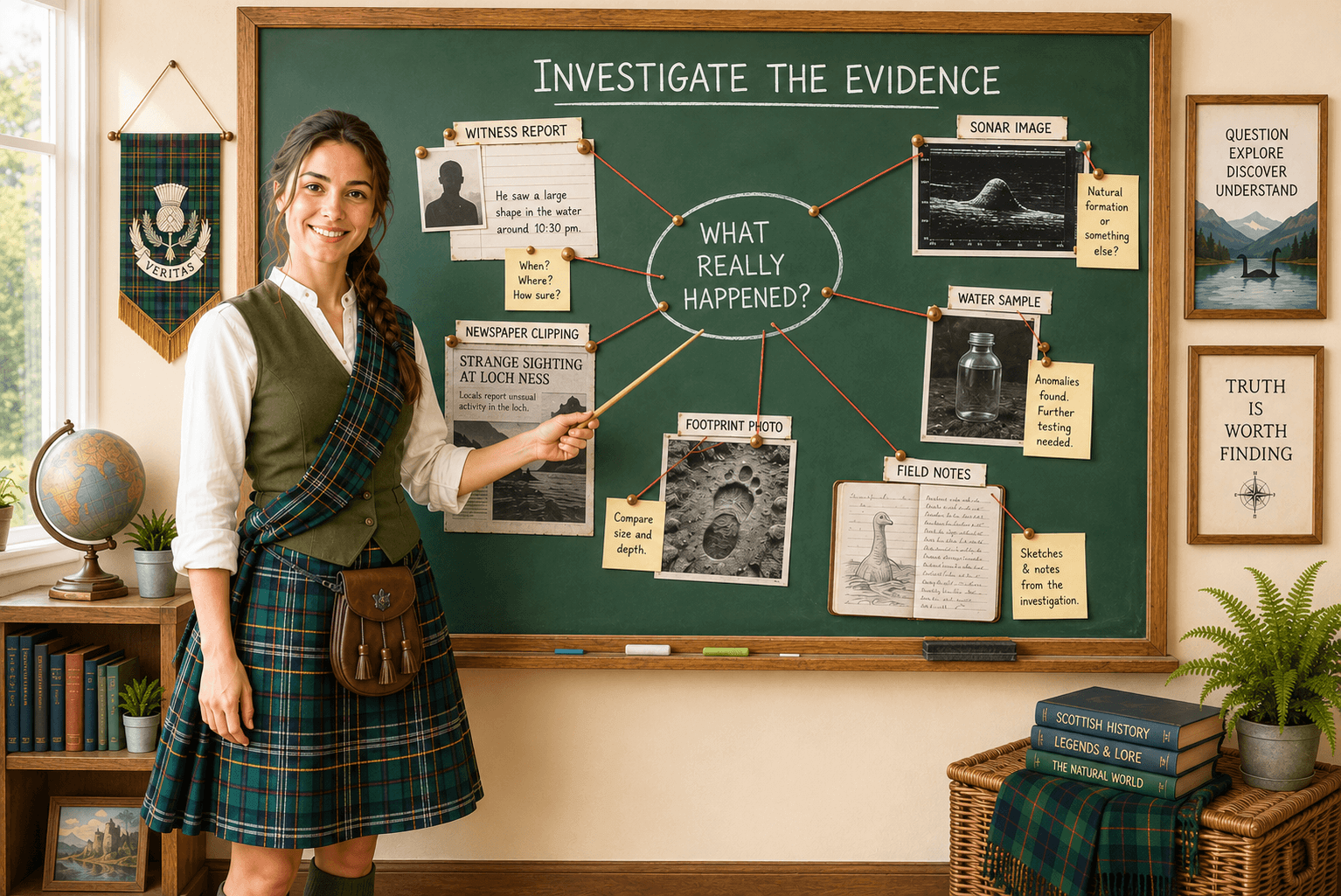
Black Swan Scientific Investigator’s Handbook
Student instructional resource
Provides a structured framework for evaluating claims, analyzing evidence, and assessing witness credibility while guiding students in investigating extraordinary claims.
-
To develop the BSSI Evidence Scale, a research-informed framework for evaluating evidence, and integrate it into a comprehensive handbook for eighth-grade students. I researched legal websites and consulted a police officer to inform the design of the evidence scale, adapting relevant principles to students’ needs. I also created easy-to-read explanations, practical examples, and visually engaging infographics to clarify complex investigative concepts and help students analyze evidence.
-
To equip students with the skills to analyze claims, evaluate evidence, assess its strength, and support conclusions before applying these skills to Is It Real? The Loch Ness Monster? The handbook centers on the BSSI Evidence Scale, an original five-level scale I designed so students can rate how strong each piece of evidence is and explain why.
-
To make complex concepts accessible through clear explanations, student-friendly examples, and visually engaging infographics. I used recurring illustrations of the same girl investigating a claim to create continuity and help students follow the investigative process.
The design and development process:
Needs Analysis:
Identified gaps in the existing instructional materials for Is It Real? The Loch Ness Monster? The book introduced direct and circumstantial evidence but did not adequately explain how these types of evidence relate to the strength of a claim or how students could evaluate them. Students needed a clearer tool to judge it.
Legal Research:
Researched legal websites and interviewed a police officer to learn how real investigators and courts weigh evidence. I used that research to build the BSSI Evidence Scale, which ranks evidence from rumor and hearsay (Level 1) to corroborated evidence from independent sources (Level 5). This way the scale reflects how the legal system actually works.
Classroom Testing & Iterative Development:
Developed ten pages of the handbook as worksheets while teaching the unit, documenting what worked, which concepts confused students, and what needed revision. Incorporated feedback from students, colleagues, and the district instructional coach, using their input and classroom observations to clarify explanations, address areas of confusion, and improve the materials. After teaching the unit, the individual worksheets were consolidated into a cohesive BSSI Handbook.
Visual Design:
Created student-friendly infographics to make complex investigative concepts clear and visually engaging. I used recurring illustrations of the same girl to create continuity and help students follow the investigative process. I used Microsoft Word, ChatGPT, and Canva to develop the materials.
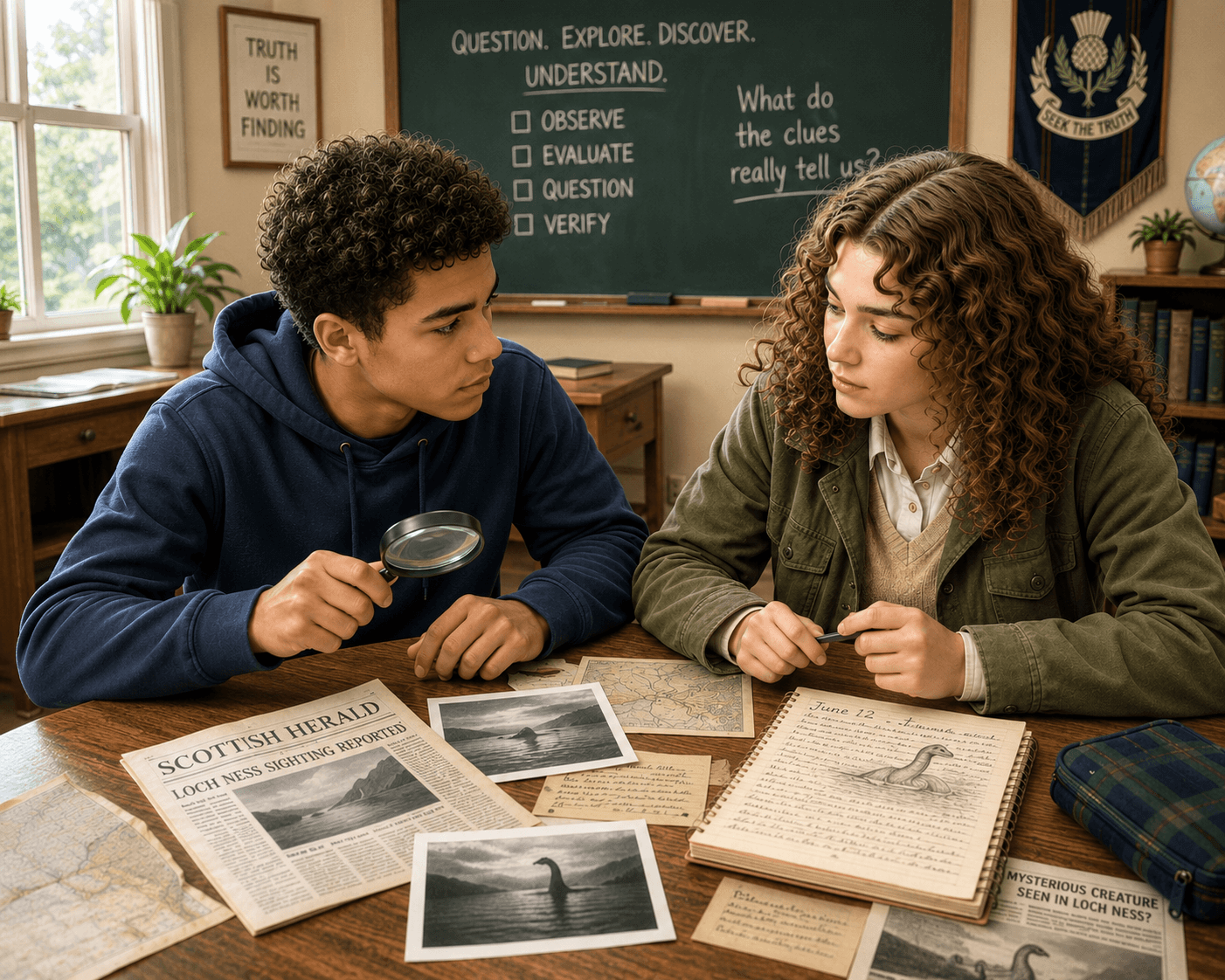
BSSI Handbook Sample Pages

Let’s Create Together
Submit an inquiry to work with me. Currently accepting requests for project-based work.